MCB
MCB Manufacturer — AC & DC Miniature Circuit Breakers
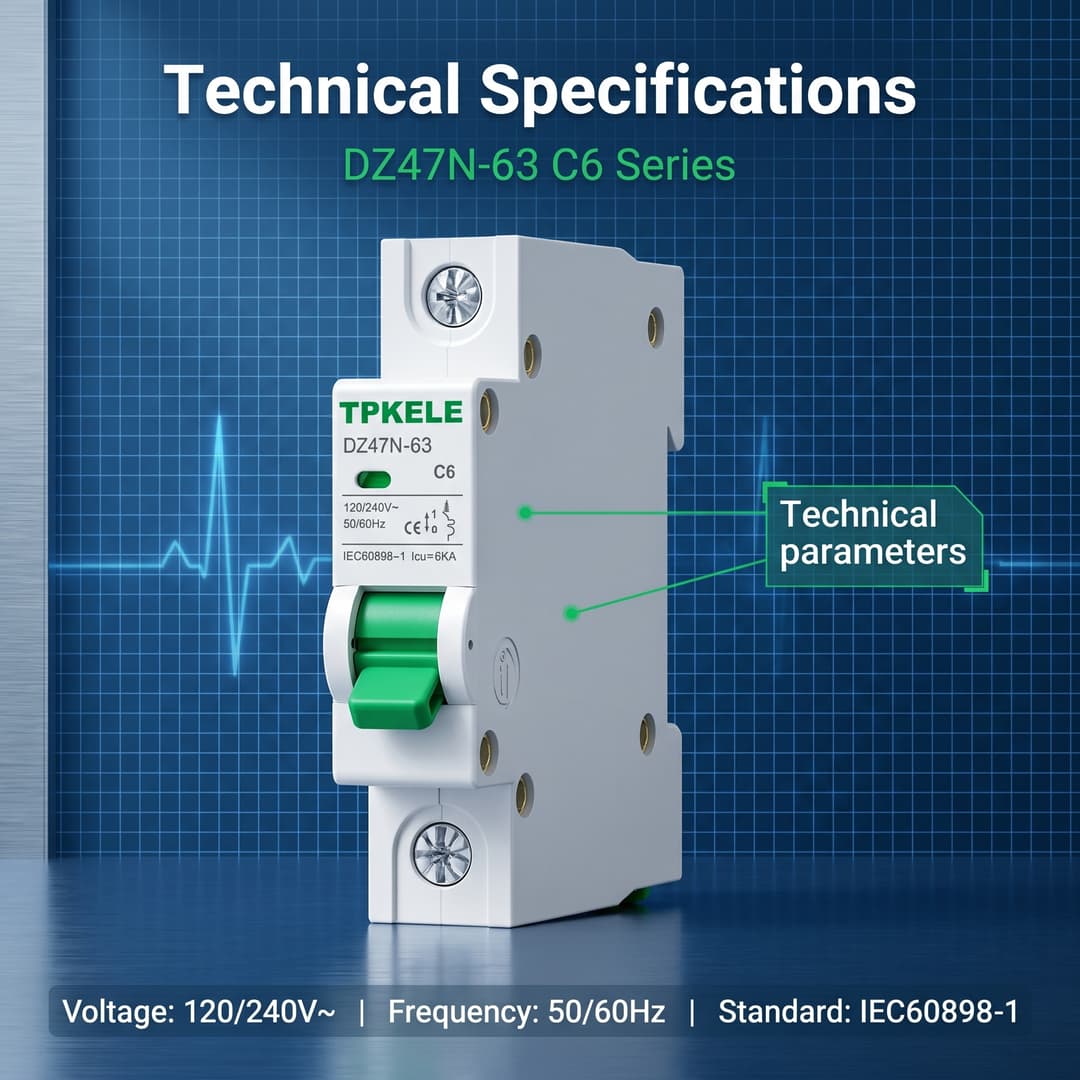
TPKELE manufactures AC and DC miniature circuit breakers for low voltage distribution boards, photovoltaic strings and battery energy storage. Our DZ47 / DZ47Z series cover 1P–4P pole configurations, 6A–63A current ratings and B / C / D trip curves, with breaking capacities up to 10kA. AC models are designed to IEC 60898-1; DC models follow IEC 60947-2. Trusted by solar EPCs, electrical distributors and panel builders across Europe, the Middle East, Southeast Asia and South America.
- AC MCB & DC MCB series for distribution and solar / BESS applications
- 1P / 2P / 3P / 4P pole configurations, 6A–63A rated currents
- B / C / D trip curves, 6kA / 10kA breaking capacity
MCB Product Lines
AC MCB
TPKELE AC MCBs deliver overload and short-circuit protection for residential, commercial and industrial AC distribution boards. Engineered to IEC 60898-1 with 6kA / 10kA breaking capacity, B/C/D trip curves and 1P–4P pole configurations, they suit panel builders, electrical distributors and EPC contractors who need a reliable, certified AC branch protection device.
View AC MCB →DC MCB
TPKELE DC MCBs are purpose-built for photovoltaic strings, battery energy storage and DC bus protection. Special arc-quenching contacts safely break DC arcs up to 1000V/1500V system voltages. 1P, 2P, 3P and 4P pole configurations support residential rooftop to utility-scale PV — the right DC circuit breaker for solar EPCs, combiner box assemblers and BESS integrators.
View DC MCB →Smart Wi-Fi MCB
TPKELE Smart Wi-Fi Circuit Breakers enable remote control, real-time electrical parameter monitoring, and programmable protection via smartphone app. Built on the Tuya Smart ecosystem with support for energy metering, scheduled switching, and configurable voltage/current protection — designed for residential smart homes, commercial buildings, and distribution circuits requiring IoT integration. Available in compact 18mm, 2P dual-pole, and earth leakage protection configurations.
View Smart Wi-Fi MCB →Frequently Asked Questions
What is the difference between AC MCB and DC MCB?
AC MCBs are designed for alternating current circuits — the AC zero-crossing helps extinguish arcs naturally. DC MCBs handle direct current with no zero-crossing, requiring specialized arc-quenching contact structures and magnets. Solar PV strings, batteries and DC bus systems must use DC MCBs rated for the system Uoc.
What system voltages do your DC MCBs cover?
Standard DC MCBs cover up to 1000V DC; for utility-scale PV we offer up to 1500V DC versions using 3P / 4P series configuration.
Which curve should I choose — B, C or D?
B curve (3–5 In) for resistive loads, C curve (5–10 In) for general-purpose distribution and mixed loads, D curve (10–20 In) for inductive loads with high inrush currents like motors and transformers.
Do you support OEM branding for MCBs?
Yes — logo printing, custom housing color, dedicated packaging and private-label catalogs are supported for distributor and brand-owner programs.
Do your MCBs carry CE certification?
Yes, TPKELE MCBs are CE & RoHS compliant. AC models are tested per IEC 60898-1; DC models per IEC 60947-2. Test reports are available for project tenders and customs documentation.