What Is an RCBO?
An RCBO combines two protection functions in one DIN-rail device: overcurrent protection and residual-current protection. It can protect a final circuit against overload and short circuit while also detecting residual current that may indicate earth leakage. This combination is particularly useful where one protective device per final circuit is preferred.
The wider product family is covered on the RCBO category page, and the compact single-module format is described on the 1P+N 18mm 6kA RCBO product page.
Continue to the TPKELE RCCB and RCBO Selection Guide before you shortlist a model.
RCBO Requirements in Australia and New Zealand
Australia and New Zealand share many electrical standards, but market-access obligations should not be treated as identical. For RCBO procurement, AS/NZS 61009.1 is one of the key product standards used for residual current operated circuit-breakers with integral overcurrent protection for household and similar applications.
In Australia, the Electrical Equipment Safety System (EESS) provides a framework used by participating jurisdictions for in-scope electrical equipment. Depending on equipment classification and market route, Responsible Supplier, documentary evidence, registration and Regulatory Compliance Mark (RCM) obligations can apply. See the official EESS Responsible Supplier guidance and EESS RCM marking guidance.
New Zealand also has electrical safety requirements. Buyers should confirm the actual destination-market obligations rather than assuming an Australian compliance route automatically covers New Zealand. Refer to WorkSafe New Zealand electrical safety guidance.
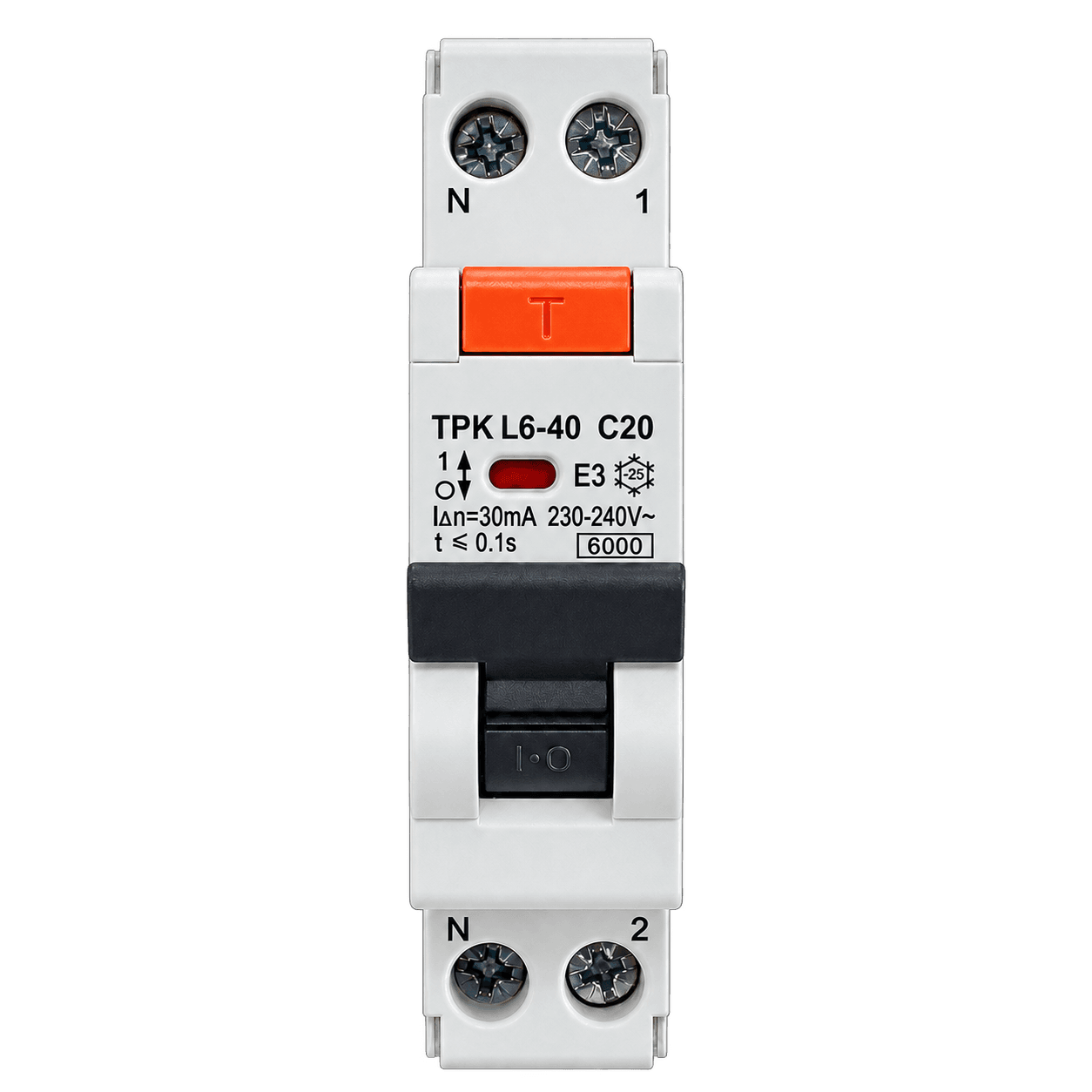
Understanding RCBO Ratings: 20A, 30mA and 6kA
Rated current, residual operating current and breaking capacity describe different functions. They should be checked independently during specification and quotation.
Why 30mA RCBOs Are Common in Final Circuits
A 30mA value refers to residual-current sensitivity rather than the amount of current the protected load normally draws. For example, a C20 30mA RCBO may be rated for a 20A circuit while the residual-current function is designed to operate at a much lower leakage-current threshold. The exact protective arrangement still depends on the installation rules and circuit.
Type A vs Type AC RCBO: What Buyers Should Check
RCD type matters because modern loads often contain power electronics. Type AC devices are intended for sinusoidal alternating residual currents, while Type A devices additionally detect pulsating DC residual currents within the scope of the applicable standard.
| Selection point | Type AC | Type A |
|---|---|---|
| Sinusoidal AC residual current | Yes | Yes |
| Pulsating DC residual current | Not its primary detection scope | Yes, within standard scope |
| Modern electronic loads | Check suitability carefully | Often the more relevant option |
Confirm the exact RCD type on the datasheet, test report and product documentation for the model being supplied.
What Does a 6kA RCBO Breaking Capacity Mean?
A 6kA marking does not mean that the RCBO carries 6000A during normal operation. It relates to specified short-circuit breaking capability under defined test conditions. The required breaking capacity depends on prospective fault current and installation design.
Why a Compact 18mm 1P+N RCBO Can Matter in Switchboards
Switchboard space is valuable. A compact 1P+N RCBO can combine overcurrent and residual-current protection in a narrow DIN-rail format, helping panel builders increase circuit density where the board design allows it.
MATCH THE ARTICLE TO THE PRODUCT
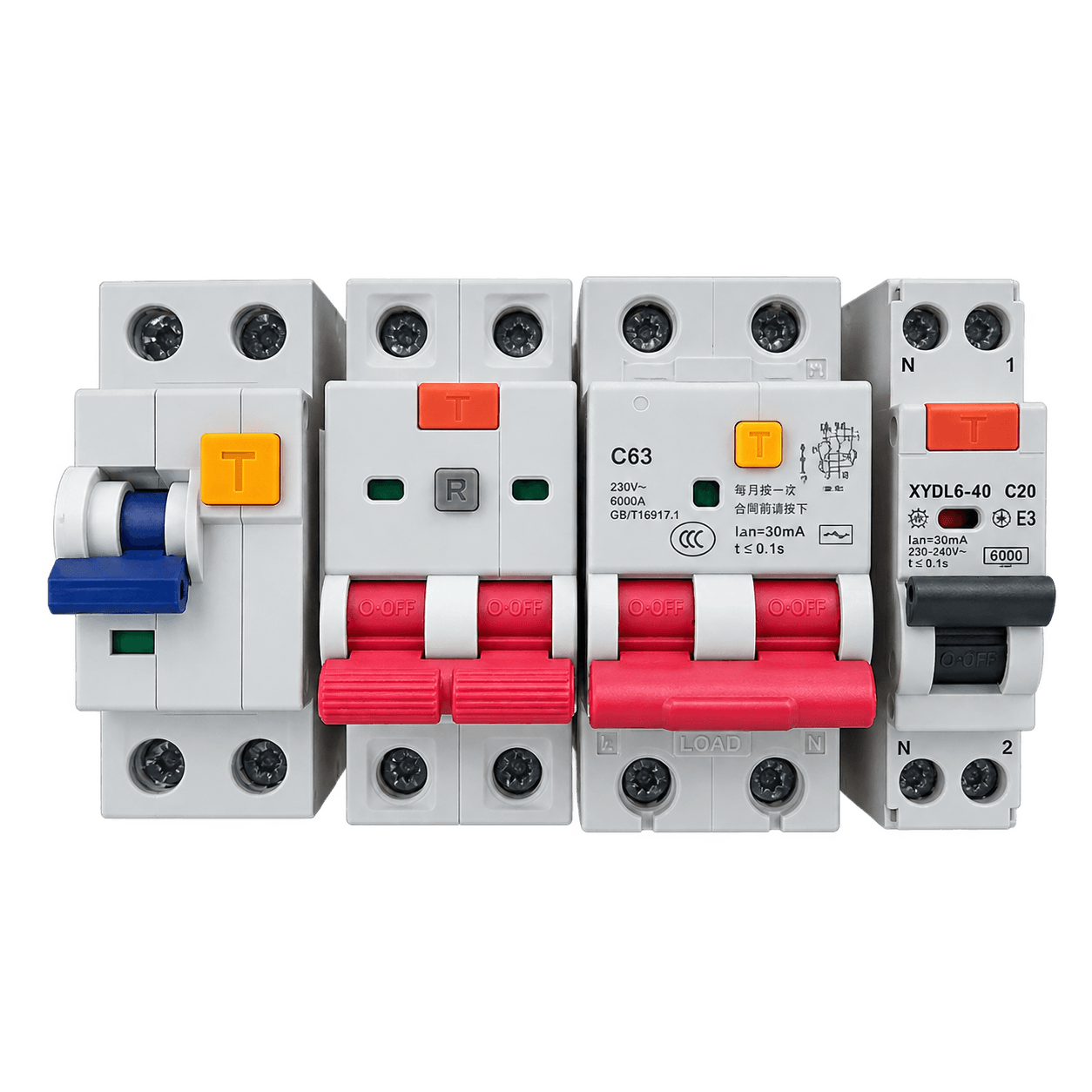
1P+N 18mm RCBO 6kA — Type A / AC, 1–40A
Continue from the guide to the live TPKELE product page to review current ratings, sensitivity options and enquiry actions.
RCBO Wiring, Terminals and Installation Considerations
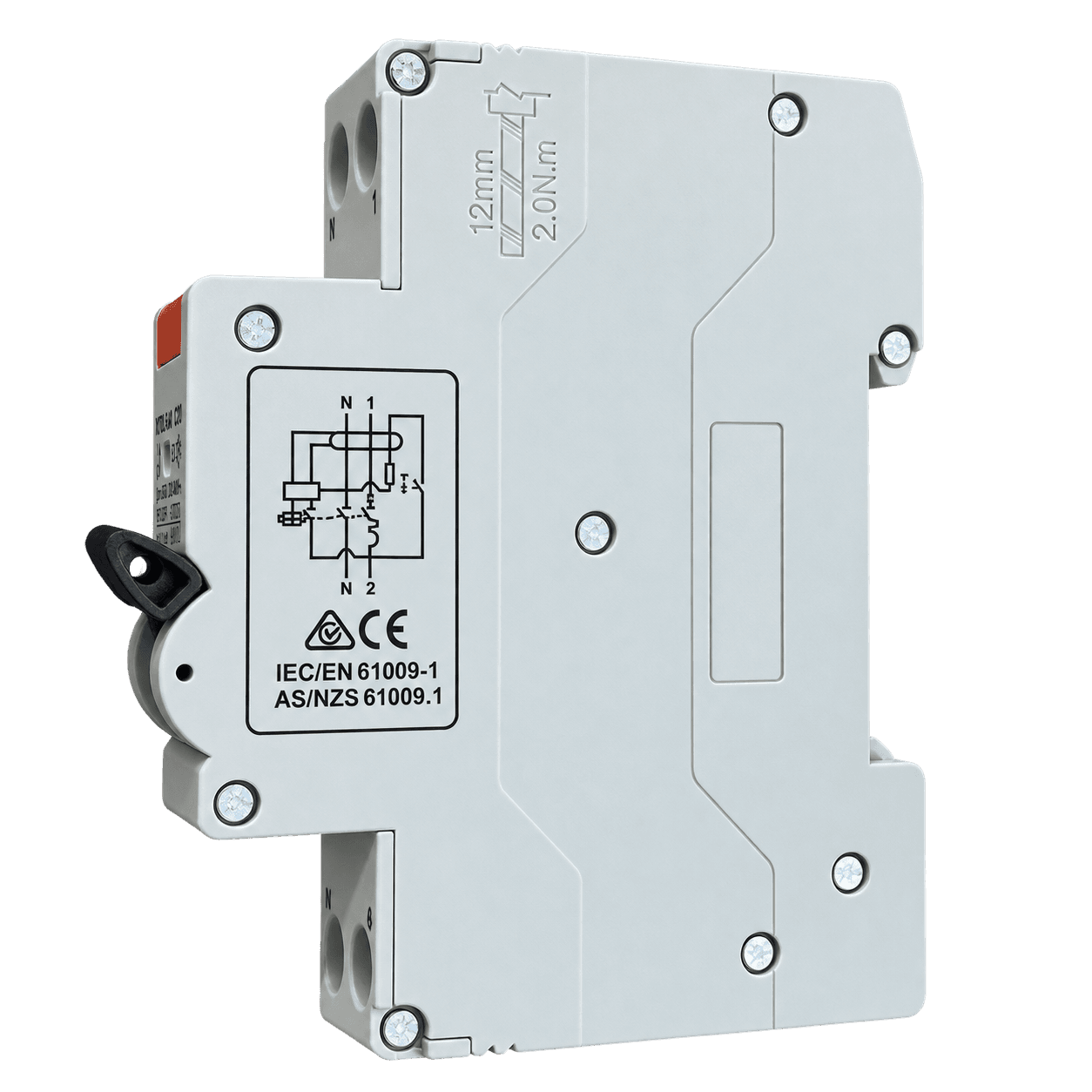
RCBO terminal arrangements are not universal. Before installation, check the manufacturer's wiring diagram, terminal identification and line/load orientation. Do not wire one model by copying another brand's terminal arrangement.
Buyer Selection Checklist for Australia or New Zealand
| Parameter | What the buyer should verify |
|---|---|
| Rated voltage | Match the supply and installation design. |
| Rated current | Choose according to conductor capacity, load and circuit design. |
| Trip characteristic | Confirm B, C or other required characteristic for the load. |
| Residual sensitivity | Confirm 30mA or another value required by the application. |
| RCD type | Confirm Type A or another required type for the connected equipment and local rules. |
| Breaking capacity | Ensure the rating is adequate for prospective fault current. |
| Pole configuration | Check 1P+N or other arrangement and neutral switching requirements. |
| Physical width | Confirm compatibility with the intended DIN-rail board. |
| Wiring arrangement | Follow the exact model's line/load and neutral terminal diagram. |
| Product standard | Confirm applicable AS/NZS / IEC standard and exact test-report scope. |
| Market compliance | Verify registration, certification, supplier and RCM obligations for the destination. |
Use the dedicated RCCB / RCBO guide for the broader selection workflow.
What Procurement Teams Should Request Before Ordering
A technically suitable RCBO is only part of a B2B procurement decision. Importers, distributors and panel builders should also review the exact commercial and technical document pack for the model they intend to buy.
Continue the procurement workflow inside TPKELE
TPKELE RCBO Route for Australian and New Zealand Buyers
TPKELE supplies low-voltage circuit-protection products for distributors, switchboard manufacturers, electrical contractors and OEM customers. The current 1P+N RCBO product page lists an 18mm single-module design, 1–40A range, 230V AC, 6kA breaking capacity and multiple residual-current sensitivity options. Buyers should still request documentation for the exact model and variant intended for the project.
For the wider range, see RCBO products and the technical guides library.
Частые вопросы
Is 30mA the same as a 30A RCBO?
No. 30mA normally refers to residual-current sensitivity, while 30A would refer to load current.
Does a 6kA RCBO carry 6000A continuously?
No. The 6kA marking relates to specified short-circuit breaking capability under defined conditions, not normal load current.
Should Australian buyers choose Type A instead of Type AC?
Type A is relevant for many modern installations because of the residual-current waveforms it can detect. Confirm the exact requirement against the installation rules, connected equipment and local guidance.
Does AS/NZS 61009.1 marking automatically mean an RCBO is approved for sale in Australia and New Zealand?
No. A standard marking is not the same as a complete market-access approval. Verify certificate scope, registration and RCM obligations for the exact model and destination.
Where can I check TPKELE procurement and compliance resources?
Use the TPKELE Market Access Advisor for country-specific checks, Buyer Trade Support for documents, Standards Database for technical references and the FAQ Knowledge Base for common procurement questions.